<?xml version="1.0" encoding="utf-8"?><feed xmlns="http://www.w3.org/2005/Atom"><title><![CDATA[Development notes by Yaroslav Yermilov]]></title><link href="https://yermilov.github.io/old-blog/categories/hashmap/atom.xml" rel="self"/><link href="https://yermilov.github.io/old-blog/"/><updated>2018-01-13T23:36:41+00:00</updated><id>https://yermilov.github.io/old-blog/</id><author><name><![CDATA[Yaroslav Yermilov]]></name></author><generator uri="http://sysgears.com/grain/">Grain</generator><entry><title type="html"><![CDATA[Tiebreaker regarding Java HashMap, TreeNode and TieBreakOrder]]></title><link href="https://yermilov.github.io/old-blog/blog/2017/02/24/tiebreaker-regarding-java-hashmap-treenode-and-tiebreakorder/"/><updated>2017-02-24T03:56:00+00:00</updated><id>/old-blog/blog/2017/02/24/tiebreaker-regarding-java-hashmap-treenode-and-tiebreakorder/</id><content type="html"><![CDATA[<div class="paragraph">
<p>On the latest <a href="http://jug.ua/2017/02/clean-tests-jdk-changes/" target="_blank">JUGUA meeting</a> Igor Dmitriev has delivered a talk about minor, behind the scenes changes in JDK.
On of them, seems to be widely-known, was HashMap being intelligent enough to turn buckets which are actually long linked lists (because of pure hashCode implementation) into search-trees.
Anyway, Igor greatly explained it in a very detailed manner.
One thing that was unclear for me, and Igor was not able to explain it as well, is why search tree is constructed for keys which do not have ordering?
After some time investigating this question at home, seems like I have the answer.</p>
</div>
<!--more-->
<div class="sect1">
<h2 id="_preface">Preface</h2>
<div class="sectionbody">
<div class="paragraph">
<p>First, the puzzler with a well-known solution.
What&#8217;s wrong with this code?</p>
</div>


<div id="gistceaeef659c16eff45c3dafa5c1502267">
  <script src="https://gist.github.com/ceaeef659c16eff45c3dafa5c1502267.js"></script>
</div>
<div class="paragraph">
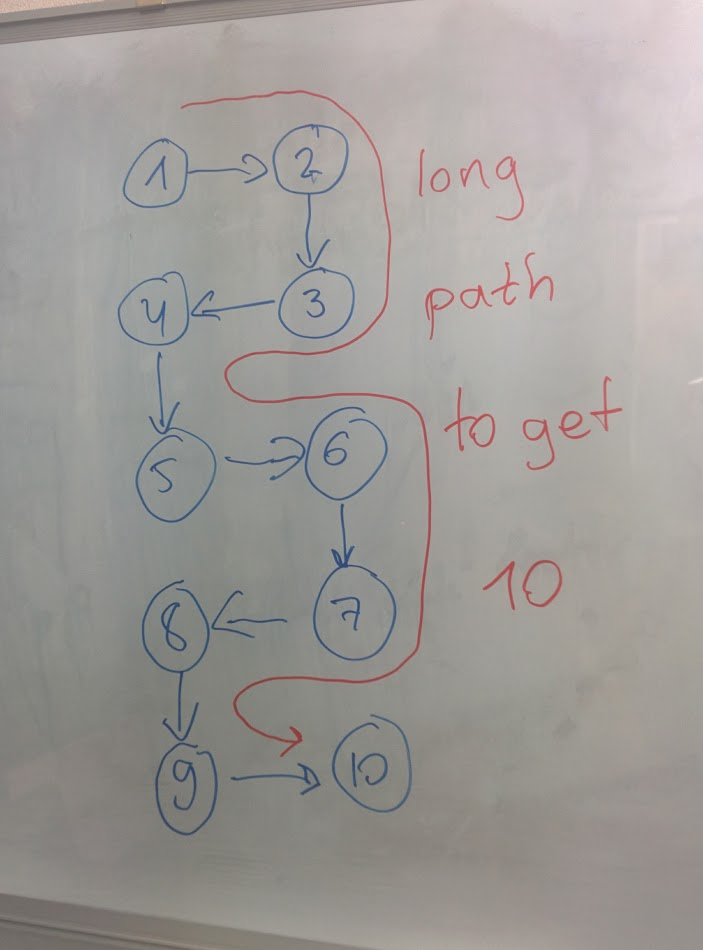
<p>Not a big secret, because of very bad hash code function, all entries will go the same bucket and form a linked list with poor performance.</p>
</div>
<div class="imageblock">
<div class="content">
<img src="/old-blog/images/2017-02-24-tie-break-order/tiebreaker-4e86c-4e86c2bd6d8ad4629cd44accb889be91.png" alt="tiebreaker 4e86c 4e86c2bd6d8ad4629cd44accb889be91">
</div>
</div>
<div class="paragraph">
<p>Good news is that Java is clever enough to transform this list into self-balancing binary search tree after the size of the problem (and map) is big enough.</p>
</div>


<div id="gist63780a37c936fd4d27a7241351ea12b3">
  <script src="https://gist.github.com/63780a37c936fd4d27a7241351ea12b3.js"></script>
</div>
<div class="paragraph">
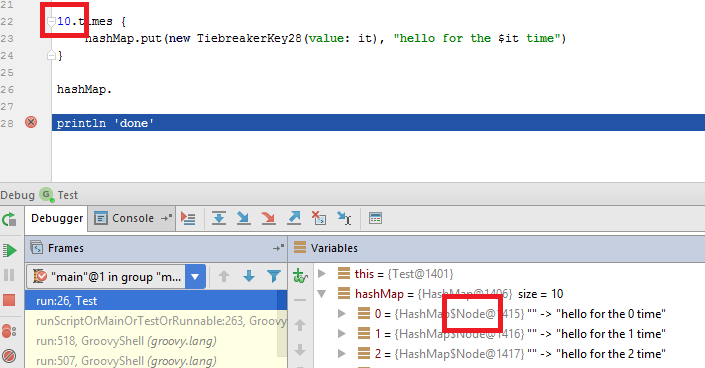
<p>Putting into simple words, for 10 elements with same hash code we will get a linked list:</p>
</div>
<div class="imageblock">
<div class="content">
<img src="/old-blog/images/2017-02-24-tie-break-order/tiebreaker-eee9f-eee9f37c77d38e8cb0ceabdc3fc4f883.png" alt="tiebreaker eee9f eee9f37c77d38e8cb0ceabdc3fc4f883">
</div>
</div>
<div class="paragraph">
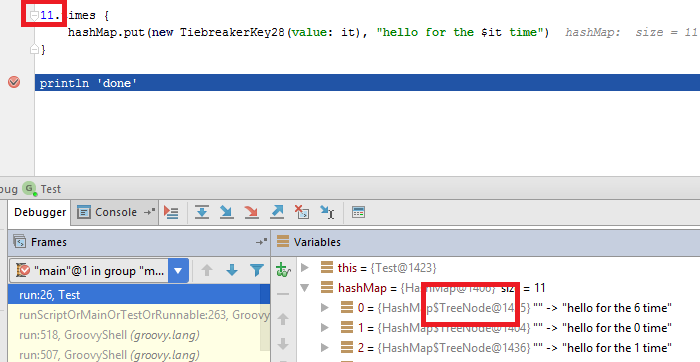
<p>For 11 elements, list will be treeified:</p>
</div>
<div class="imageblock">
<div class="content">
<img src="/old-blog/images/2017-02-24-tie-break-order/tiebreaker-72e7c-72e7c6c141be981f3d2f56e8d342d929.png" alt="tiebreaker 72e7c 72e7c6c141be981f3d2f56e8d342d929">
</div>
</div>
</div>
</div>
<div class="sect1">
<h2 id="_closer_to_the_problem">Closer to the problem</h2>
<div class="sectionbody">
<div class="paragraph">
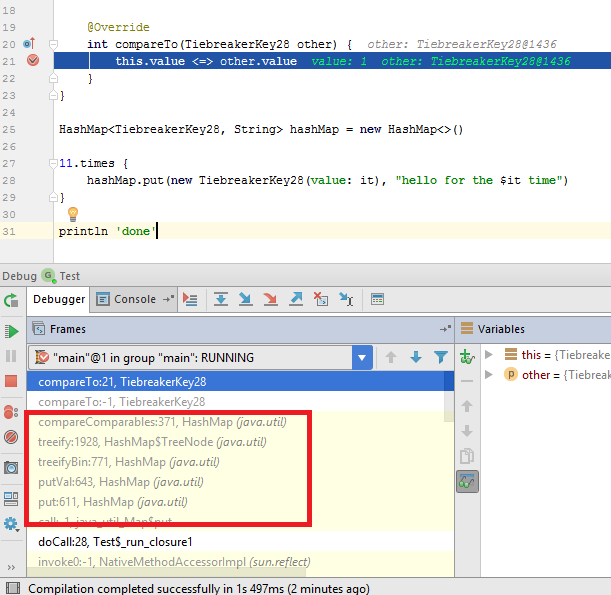
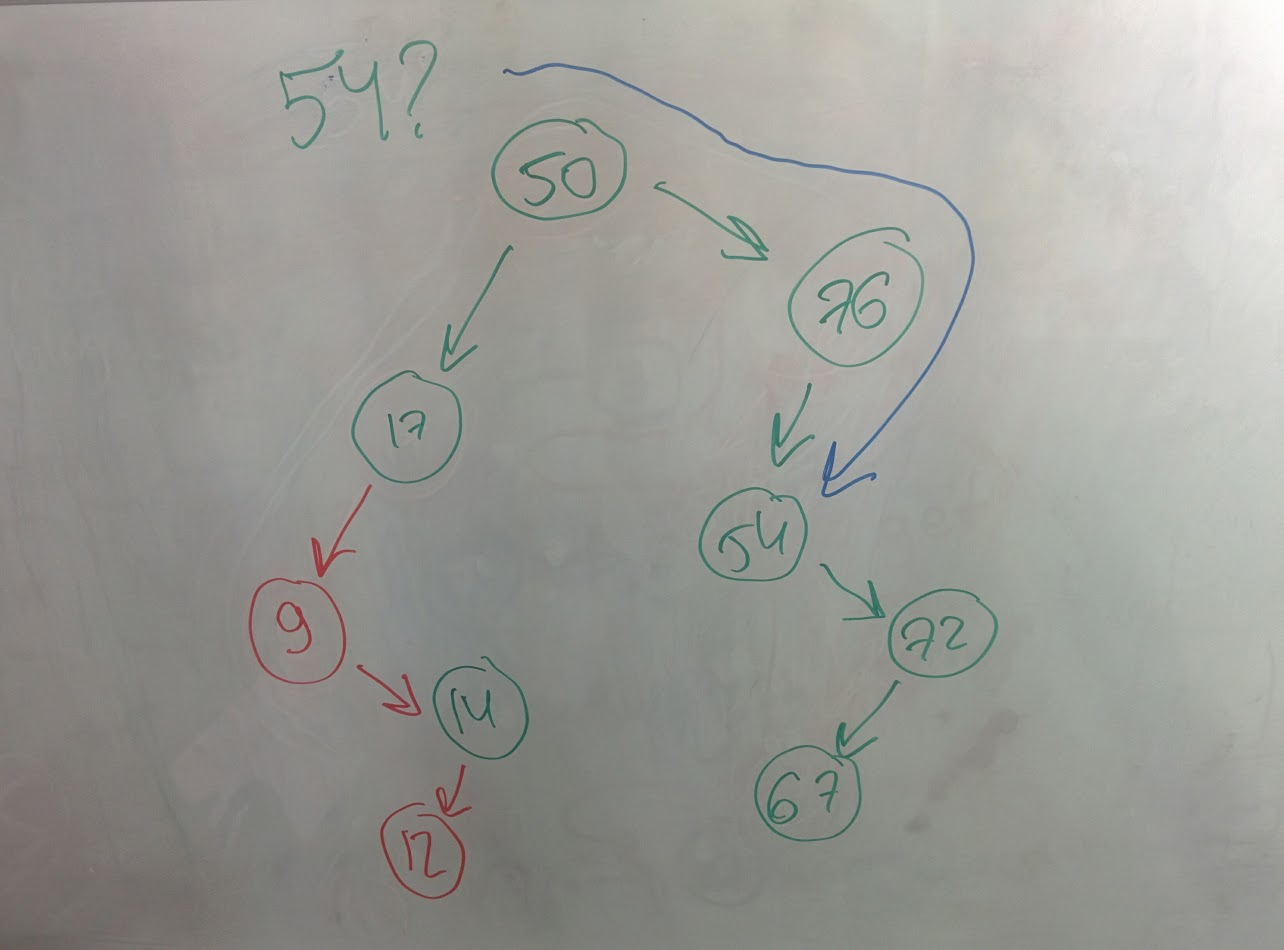
<p>The attentive reader will ask: if HashMap organizes self-balancing binary search tree, how does it determine an order of elements, which is the must for this data structure?
Well, if you class luckily implements <em>Comparable</em> interface, it&#8217;s pretty easy job:</p>
</div>


<div id="gistcf90e7eef1975bad9cc302f53612ef6a">
  <script src="https://gist.github.com/cf90e7eef1975bad9cc302f53612ef6a.js"></script>
</div>
<div class="imageblock">
<div class="content">
<img src="/old-blog/images/2017-02-24-tie-break-order/tiebreaker-512ed-512edac15bc15f2e881c438e0baeee4c.png" alt="tiebreaker 512ed 512edac15bc15f2e881c438e0baeee4c">
</div>
</div>
<div class="paragraph">
<p>But what if not?
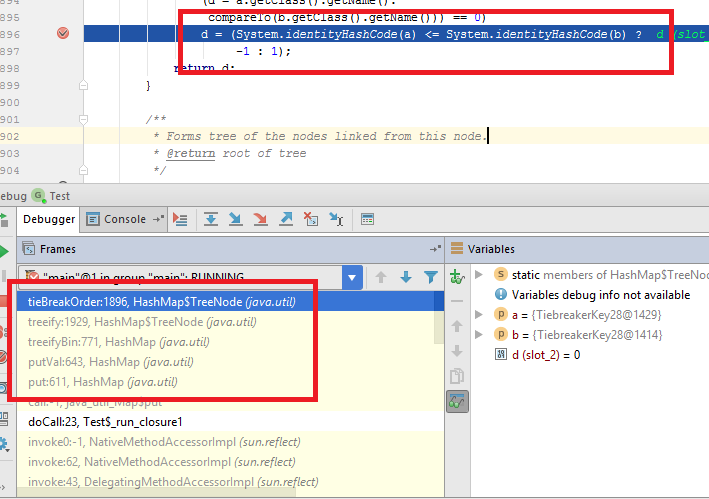
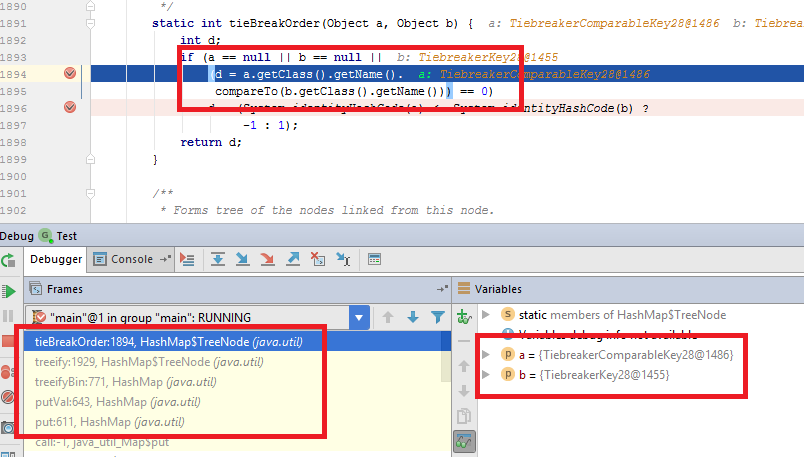
In this case as a <a href="https://en.wikipedia.org/wiki/Tiebreaker" target="_blank">tiebreaker</a>, HashMap uses <a href="https://docs.oracle.com/javase/8/docs/api/java/lang/System.html#identityHashCode-java.lang.Object-" target="_blank">System.identityHashCode()</a>.
Or simpler, some value unique and constant for each instance.</p>
</div>
<div class="imageblock">
<div class="content">
<img src="/old-blog/images/2017-02-24-tie-break-order/tiebreaker-93a1a-93a1af2efc58a8fe7c9ff1fdc4b030f6.png" alt="tiebreaker 93a1a 93a1af2efc58a8fe7c9ff1fdc4b030f6">
</div>
</div>
</div>
</div>
<div class="sect1">
<h2 id="_so_long_what_s_the_problem">So long! What&#8217;s the problem?</h2>
<div class="sectionbody">
<div class="paragraph">
<p>The problem is that HashMap does not use tiebreak order on get operation.</p>
</div>
<div class="paragraph">
<p>If key class implements <em>Comparable</em>, get operation uses search tree feature:</p>
</div>
<div class="imageblock">
<div class="content">
<img src="/old-blog/images/2017-02-24-tie-break-order/tiebreaker-d35a8-d35a8ac56ddde62abc2177ae5c297000.png" alt="tiebreaker d35a8 d35a8ac56ddde62abc2177ae5c297000">
</div>
</div>
<div class="paragraph">
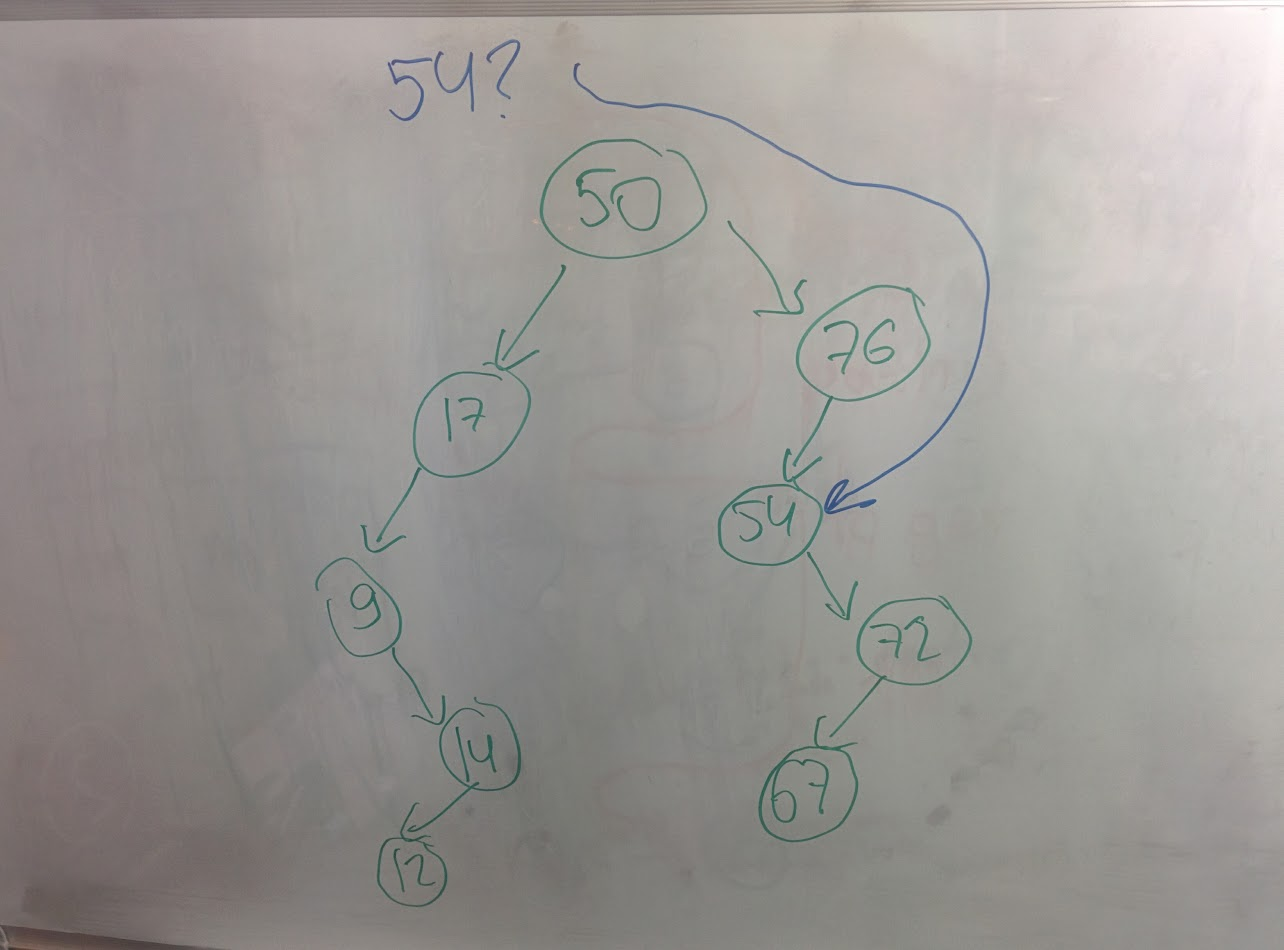
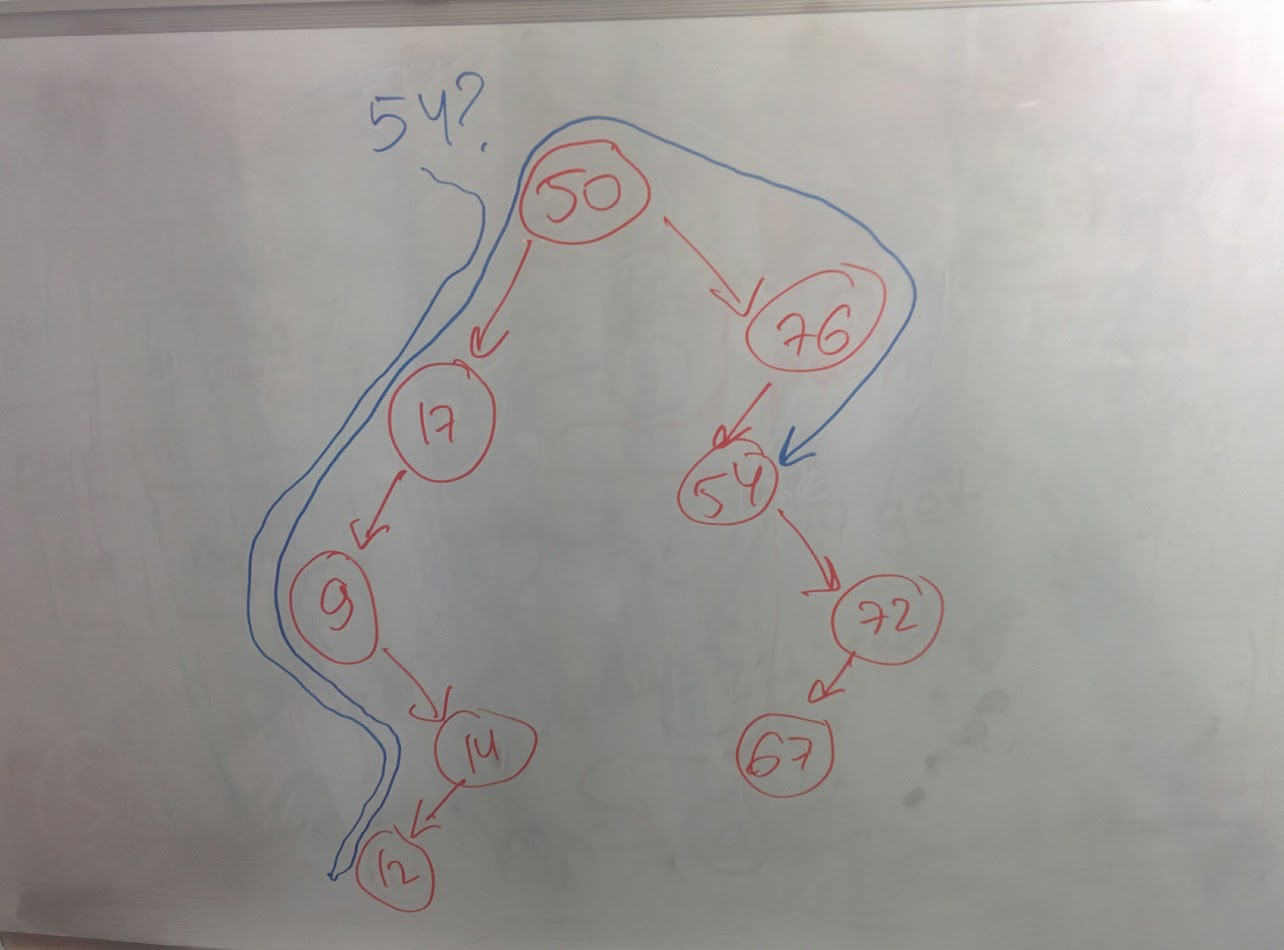
<p>If key class does not implement <em>Comparable</em>, it will traverse all the tree to find specified entry:</p>
</div>
<div class="imageblock">
<div class="content">
<img src="/old-blog/images/2017-02-24-tie-break-order/tiebreaker-f3142-f3142241619599dd171768d3c73f7604.png" alt="tiebreaker f3142 f3142241619599dd171768d3c73f7604">
</div>
</div>
<div class="paragraph">
<p>Given this, two questions occur one by one:</p>
</div>
<div class="paragraph">
<p>Q-1. Why is tiebreak order not used?</p>
</div>
<div class="paragraph">
<p>A-1. This one is easy:</p>
</div>


<div id="giste1b620606c7739f3db9f5e47c6fe413c">
  <script src="https://gist.github.com/e1b620606c7739f3db9f5e47c6fe413c.js"></script>
</div>
<div class="paragraph">
<p>By definition, two equal object instances will have different identity hash code, so we can&#8217;t use it as a comparator.</p>
</div>
<div class="paragraph">
<p>Q-2. <strong><strong>If we need to traverse the full tree, why HashMap bothers itself with constructing a tree? No benefits, just wasted time on tree creation!</strong></strong></p>
</div>
</div>
</div>
<div class="sect1">
<h2 id="_answer">Answer</h2>
<div class="sectionbody">
<div class="paragraph">
<p>It&#8217;s so simple! HashMap can contain keys of different classes. And some of them may be <em>comparable</em> and some of them not.</p>
</div>


<div id="gista8b968c30f7ea0211a3dd10c288494d3">
  <script src="https://gist.github.com/a8b968c30f7ea0211a3dd10c288494d3.js"></script>
</div>
<div class="paragraph">
<p>What does this mix imply?
If we compare two keys of different classes, result is based on class name:</p>
</div>
<div class="imageblock">
<div class="content">
<img src="/old-blog/images/2017-02-24-tie-break-order/tiebreaker-755ed-755edcfa943292ad31cbfc42ed20da05.png" alt="tiebreaker 755ed 755edcfa943292ad31cbfc42ed20da05">
</div>
</div>
<div class="paragraph">
<p>This means that key mix is pretty straightforward: first, all keys from first class goes, and then all from the second.</p>
</div>
<div class="paragraph">
<p>If we compare two keys of the same class, original rules are used: <em>compareTo()</em> or <em>System.identityHashCode()</em> is invoked.</p>
</div>
<div class="paragraph">
<p>And now, the main conclusions:</p>
</div>
<div class="paragraph">
<p><strong><strong>if we want to get incomparable key from the map, full traverse is used:</strong></strong></p>
</div>
<div class="imageblock">
<div class="content">
<img src="/old-blog/images/2017-02-24-tie-break-order/tiebreaker-3f4b5-3f4b5cb15b2af11910548adf33ecc857.png" alt="tiebreaker 3f4b5 3f4b5cb15b2af11910548adf33ecc857">
</div>
</div>
<div class="paragraph">
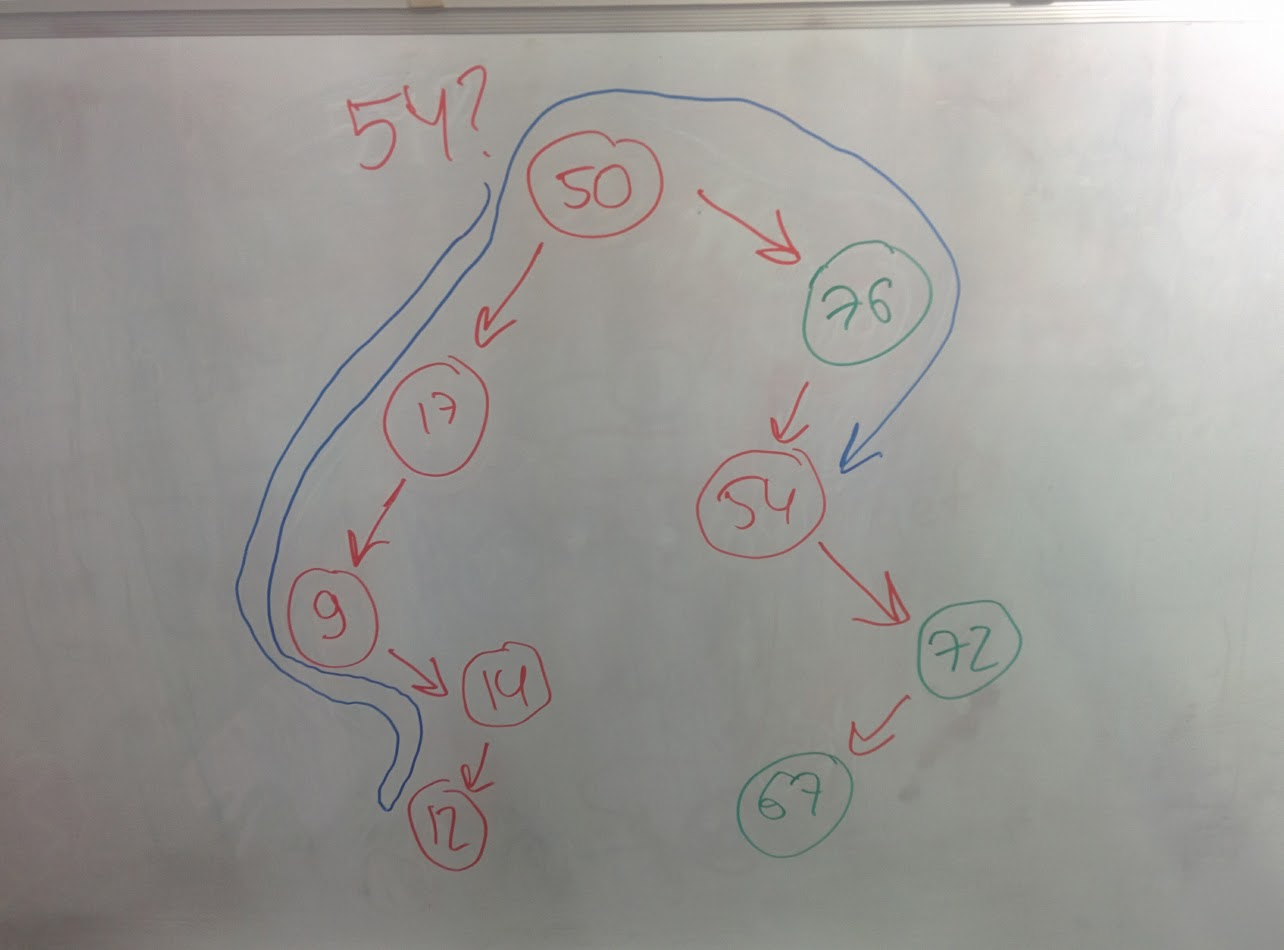
<p><strong><strong>if we want to get comparable key from the map, while it goes through comparable keys on its way through the tree, it may use search-tree feature for quick search:</strong></strong></p>
</div>
<div class="imageblock">
<div class="content">
<img src="/old-blog/images/2017-02-24-tie-break-order/tiebreaker-fe010-fe0105e3b53429e27e0f6d21618d71d8.png" alt="tiebreaker fe010 fe0105e3b53429e27e0f6d21618d71d8">
</div>
</div>
</div>
</div>
<div class="sect1">
<h2 id="_conclusion">Conclusion</h2>
<div class="sectionbody">
<div class="paragraph">
<p>One of my most favorite feature of programming craft, is that there are so many <em>magic</em> things, which after several hours of investigation turns into <em>very rational</em> decisions.</p>
</div>
</div>
</div>]]></content></entry></feed>